
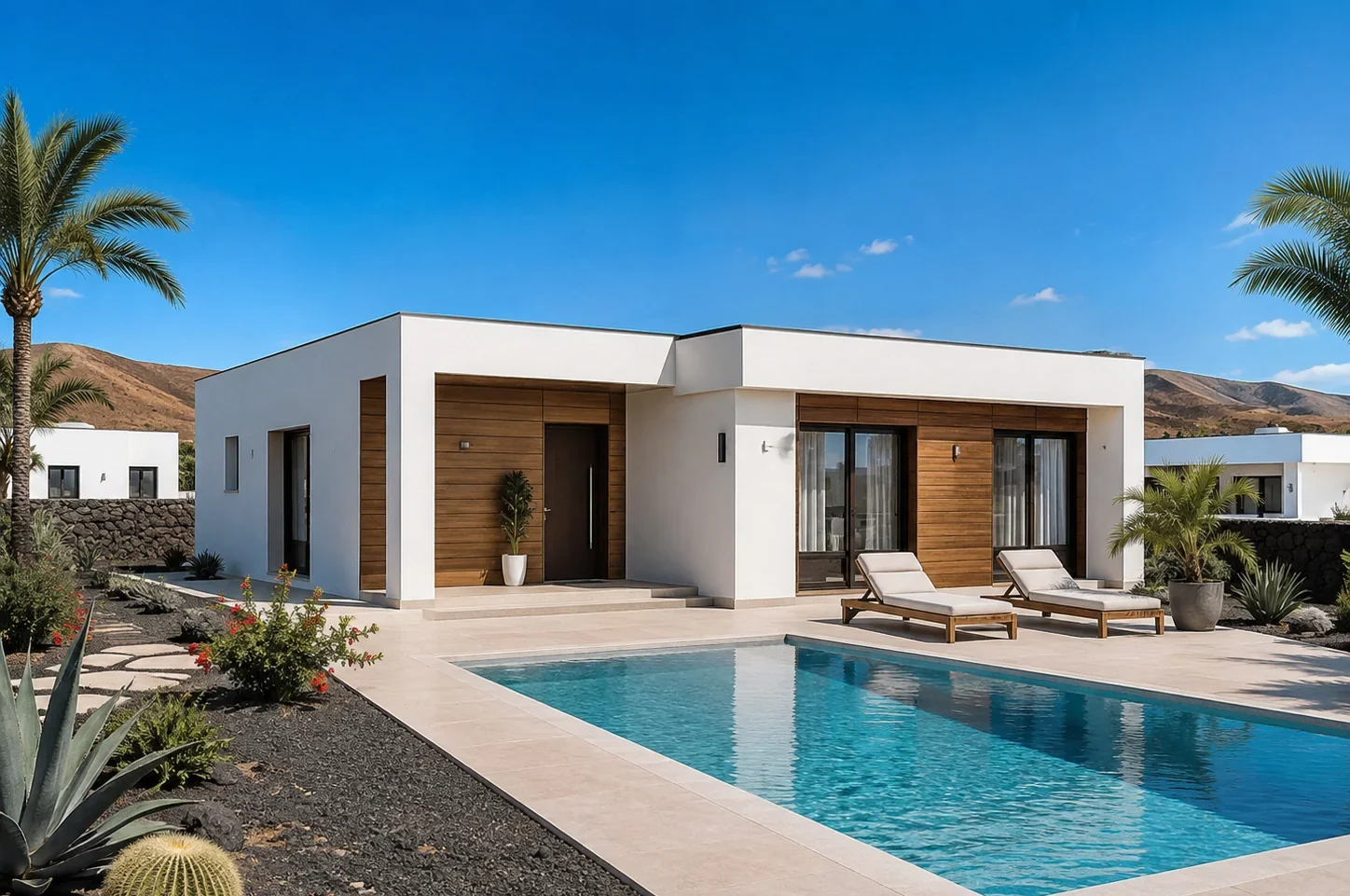
Thermal and acoustic insulation for a home in Fuerteventura
A mild climate does not make insulation unnecessary. A well-designed envelope stabilises temperature, controls noise and reduces reliance on mechanical systems.
Where to begin
Design the envelope as a continuous system, avoiding breaks at walls, roof, foundations and windows. Protection from overheating combines insulation, shading and solar control rather than relying on one product. A useful quotation states what is included, what is excluded and which assumptions have been made. A stand-alone figure without a design or plot assessment is only an early reference.
Technical decisions
Select build-ups suited to local moisture conditions and able to manage vapour correctly. Pay attention to airtightness and window installation to reduce uncontrolled draughts and wind noise. The strongest choice is the one that remains coherent when planning feasibility, architectural quality, future maintenance and the total budget are considered together.
Budget, timing and checks
Where the plot is near roads or activity, design elevations and room arrangement with acoustics in mind. Pumps, equipment and external units should be isolated from structures and positioned away from bedrooms. The starting point is not selecting a catalogue solution. It is understanding how the subject relates to the plot, local rules and the way the home will actually be used.
How to reach a robust decision
Internal thermal mass can stabilise temperatures when combined with shade and night ventilation. Test the performance of the complete assembly because high-quality components installed poorly do not create a good envelope. Across Fuerteventura, sunlight, wind, salt exposure, access and service availability vary considerably. A decision that looks sound in theory can become inefficient on the wrong plot.
Practical checklist
- Design the envelope as a continuous system, avoiding breaks at walls, roof, foundations and windows.
- Protection from overheating combines insulation, shading and solar control rather than relying on one product.
- Select build-ups suited to local moisture conditions and able to manage vapour correctly.
- Pay attention to airtightness and window installation to reduce uncontrolled draughts and wind noise.
- Where the plot is near roads or activity, design elevations and room arrangement with acoustics in mind.
- Pumps, equipment and external units should be isolated from structures and positioned away from bedrooms.
- Internal thermal mass can stabilise temperatures when combined with shade and night ventilation.
- Test the performance of the complete assembly because high-quality components installed poorly do not create a good envelope.
Mistakes to avoid
- Reducing insulation because the island is warm for much of the year.
- Ignoring thermal bridges and junctions around windows.
- Placing technical units near bedrooms and courtyards without acoustic control.
Frequently asked questions
What is the first step?
Design the envelope as a continuous system, avoiding breaks at walls, roof, foundations and windows. Protection from overheating combines insulation, shading and solar control rather than relying on one product.
What determines cost and timing?
Where the plot is near roads or activity, design elevations and room arrangement with acoustics in mind. Pumps, equipment and external units should be isolated from structures and positioned away from bedrooms.
Is a technical check needed before deciding?
Internal thermal mass can stabilise temperatures when combined with shade and night ventilation. Test the performance of the complete assembly because high-quality components installed poorly do not create a good envelope. The strongest choice is the one that remains coherent when planning feasibility, architectural quality, future maintenance and the total budget are considered together.
Do you have a plot or an idea to assess?
Tell us the area, approximate floor area and finish level you have in mind. We can help organise the initial checks and the design path.
Discuss your project →