
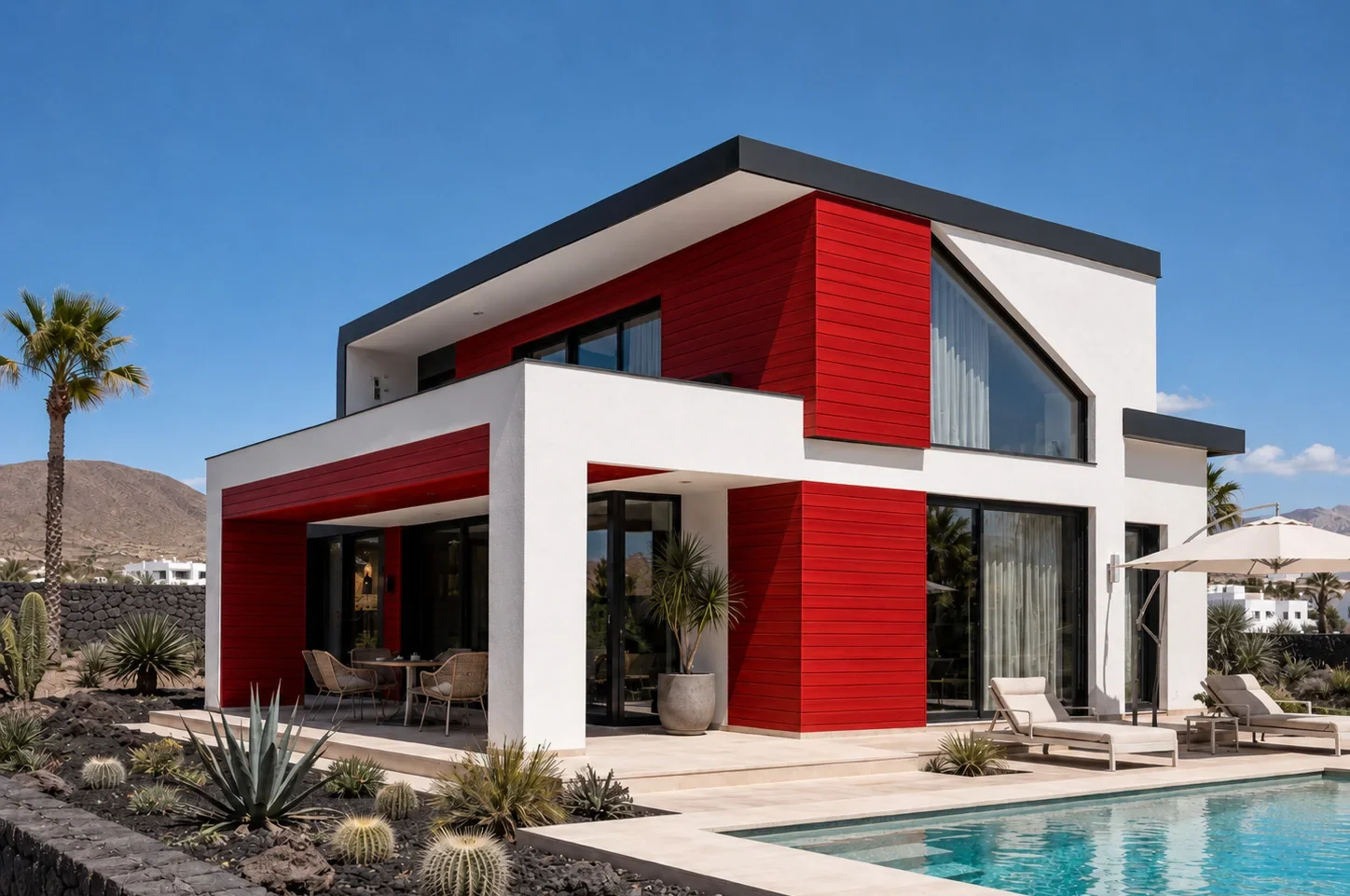
Protecting a home from salt exposure in Fuerteventura
Near the sea, salt-laden air accelerates corrosion and deterioration. Materials, detailing, maintenance and distance from the coast should shape the design from the start.
Where to begin
Assess actual exposure using distance from the sea, prevailing winds and natural or built barriers. Choose metals, coatings and fixings suitable for marine conditions, avoiding combinations that encourage galvanic corrosion. Across Fuerteventura, sunlight, wind, salt exposure, access and service availability vary considerably. A decision that looks sound in theory can become inefficient on the wrong plot.
Technical decisions
Protect edges, joints and collection points where water and salt can concentrate. Prefer replaceable hardware and components with available spares and straightforward maintenance. A useful quotation states what is included, what is excluded and which assumptions have been made. A stand-alone figure without a design or plot assessment is only an early reference.
Budget, timing and checks
Design façades and roofs so washing, inspection and periodic renewal remain practical. Set cleaning cycles for glazing, windows, solar panels, balustrades and outdoor equipment. The strongest choice is the one that remains coherent when planning feasibility, architectural quality, future maintenance and the total budget are considered together.
How to reach a robust decision
Use coatings and paints appropriate to the substrate and exposure, following the required preparation and thickness. Protect external services, technical units and electrical connections from spray, moisture and salt-dust accumulation. The starting point is not selecting a catalogue solution. It is understanding how the subject relates to the plot, local rules and the way the home will actually be used.
Practical checklist
- Assess actual exposure using distance from the sea, prevailing winds and natural or built barriers.
- Choose metals, coatings and fixings suitable for marine conditions, avoiding combinations that encourage galvanic corrosion.
- Protect edges, joints and collection points where water and salt can concentrate.
- Prefer replaceable hardware and components with available spares and straightforward maintenance.
- Design façades and roofs so washing, inspection and periodic renewal remain practical.
- Set cleaning cycles for glazing, windows, solar panels, balustrades and outdoor equipment.
- Use coatings and paints appropriate to the substrate and exposure, following the required preparation and thickness.
- Protect external services, technical units and electrical connections from spray, moisture and salt-dust accumulation.
Mistakes to avoid
- Using inexpensive hardware not rated for marine exposure.
- Assuming stainless steel means no maintenance at all.
- Concealing fixings and joints in uninspectable areas where deterioration remains unnoticed.
Frequently asked questions
What is the first step?
Assess actual exposure using distance from the sea, prevailing winds and natural or built barriers. Choose metals, coatings and fixings suitable for marine conditions, avoiding combinations that encourage galvanic corrosion.
What determines cost and timing?
Design façades and roofs so washing, inspection and periodic renewal remain practical. Set cleaning cycles for glazing, windows, solar panels, balustrades and outdoor equipment.
Is a technical check needed before deciding?
Use coatings and paints appropriate to the substrate and exposure, following the required preparation and thickness. Protect external services, technical units and electrical connections from spray, moisture and salt-dust accumulation. The strongest choice is the one that remains coherent when planning feasibility, architectural quality, future maintenance and the total budget are considered together.
Do you have a plot or an idea to assess?
Tell us the area, approximate floor area and finish level you have in mind. We can help organise the initial checks and the design path.
Discuss your project →