
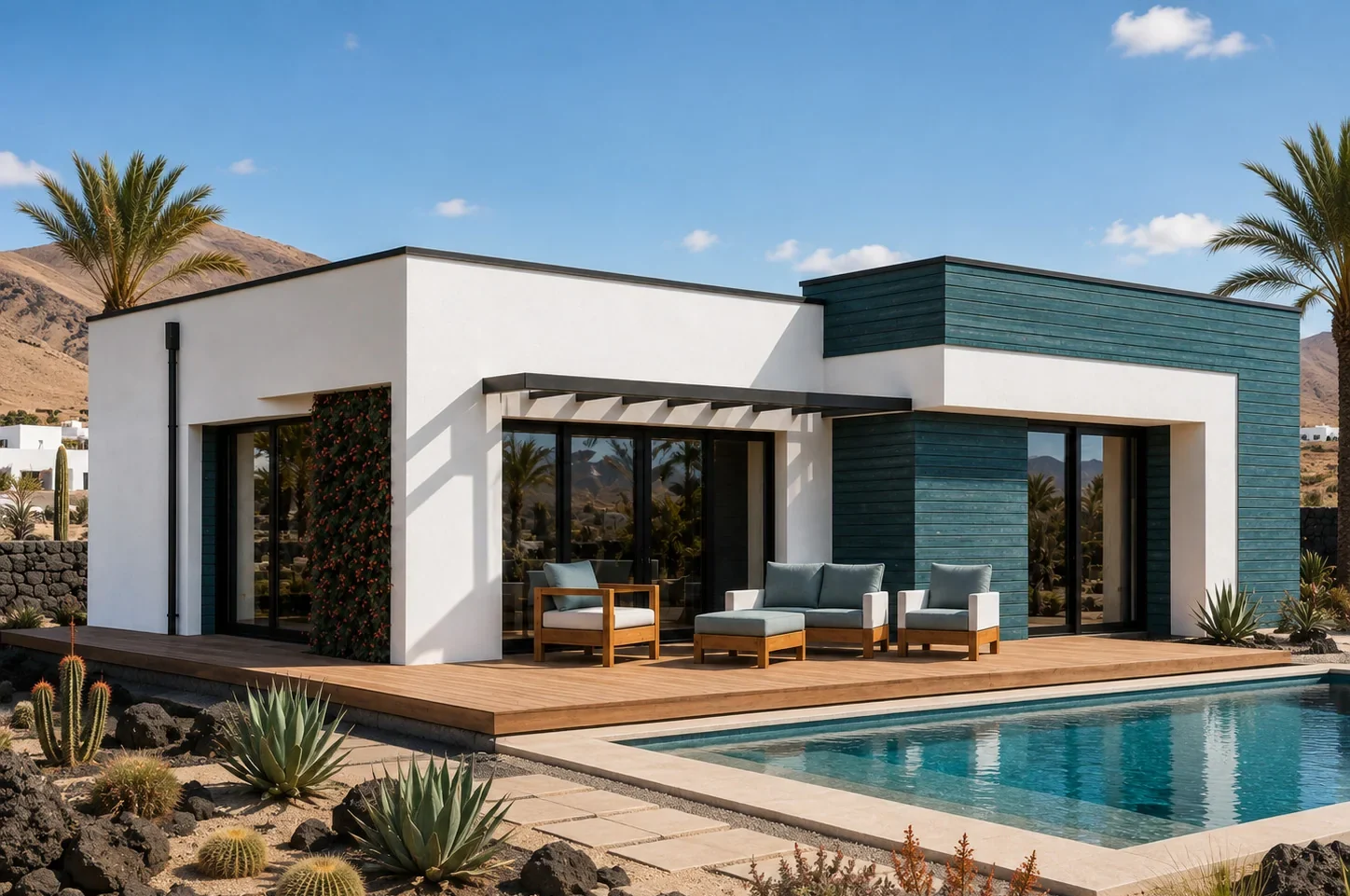
Flat roofs in Fuerteventura: benefits, detailing and maintenance
A flat roof suits the island’s architecture, but falls, drainage, waterproofing and access must be designed with precision.
Where to begin
Flat does not mean perfectly level: falls should direct water to outlets that can be inspected. Waterproofing and insulation should form a compatible system for the substrate, temperatures and movement. The starting point is not selecting a catalogue solution. It is understanding how the subject relates to the plot, local rules and the way the home will actually be used.
Technical decisions
Outlets, overflows and water paths must remain accessible for cleaning and checking. Parapets, edge details and service penetrations are critical points to resolve before construction. Across Fuerteventura, sunlight, wind, salt exposure, access and service availability vary considerably. A decision that looks sound in theory can become inefficient on the wrong plot.
Budget, timing and checks
Photovoltaic panels and equipment should be arranged without puncturing or obstructing the waterproofing. Wind requires engineered fixing or ballast for panels, plant and every roof-mounted element. A useful quotation states what is included, what is excluded and which assumptions have been made. A stand-alone figure without a design or plot assessment is only an early reference.
How to reach a robust decision
A light-coloured finish can reduce heat gain when compatible with the roof system. The maintenance plan should include periodic inspections, especially after work by other trades. The strongest choice is the one that remains coherent when planning feasibility, architectural quality, future maintenance and the total budget are considered together.
Practical checklist
- Flat does not mean perfectly level: falls should direct water to outlets that can be inspected.
- Waterproofing and insulation should form a compatible system for the substrate, temperatures and movement.
- Outlets, overflows and water paths must remain accessible for cleaning and checking.
- Parapets, edge details and service penetrations are critical points to resolve before construction.
- Photovoltaic panels and equipment should be arranged without puncturing or obstructing the waterproofing.
- Wind requires engineered fixing or ballast for panels, plant and every roof-mounted element.
- A light-coloured finish can reduce heat gain when compatible with the roof system.
- The maintenance plan should include periodic inspections, especially after work by other trades.
Mistakes to avoid
- Providing outlets without overflow or inspection access.
- Adding equipment later by penetrating the roof without a technical detail.
- Assuming a roof without tiles is maintenance-free.
Frequently asked questions
What is the first step?
Flat does not mean perfectly level: falls should direct water to outlets that can be inspected. Waterproofing and insulation should form a compatible system for the substrate, temperatures and movement.
What determines cost and timing?
Photovoltaic panels and equipment should be arranged without puncturing or obstructing the waterproofing. Wind requires engineered fixing or ballast for panels, plant and every roof-mounted element.
Is a technical check needed before deciding?
A light-coloured finish can reduce heat gain when compatible with the roof system. The maintenance plan should include periodic inspections, especially after work by other trades. The strongest choice is the one that remains coherent when planning feasibility, architectural quality, future maintenance and the total budget are considered together.
Do you have a plot or an idea to assess?
Tell us the area, approximate floor area and finish level you have in mind. We can help organise the initial checks and the design path.
Discuss your project →