
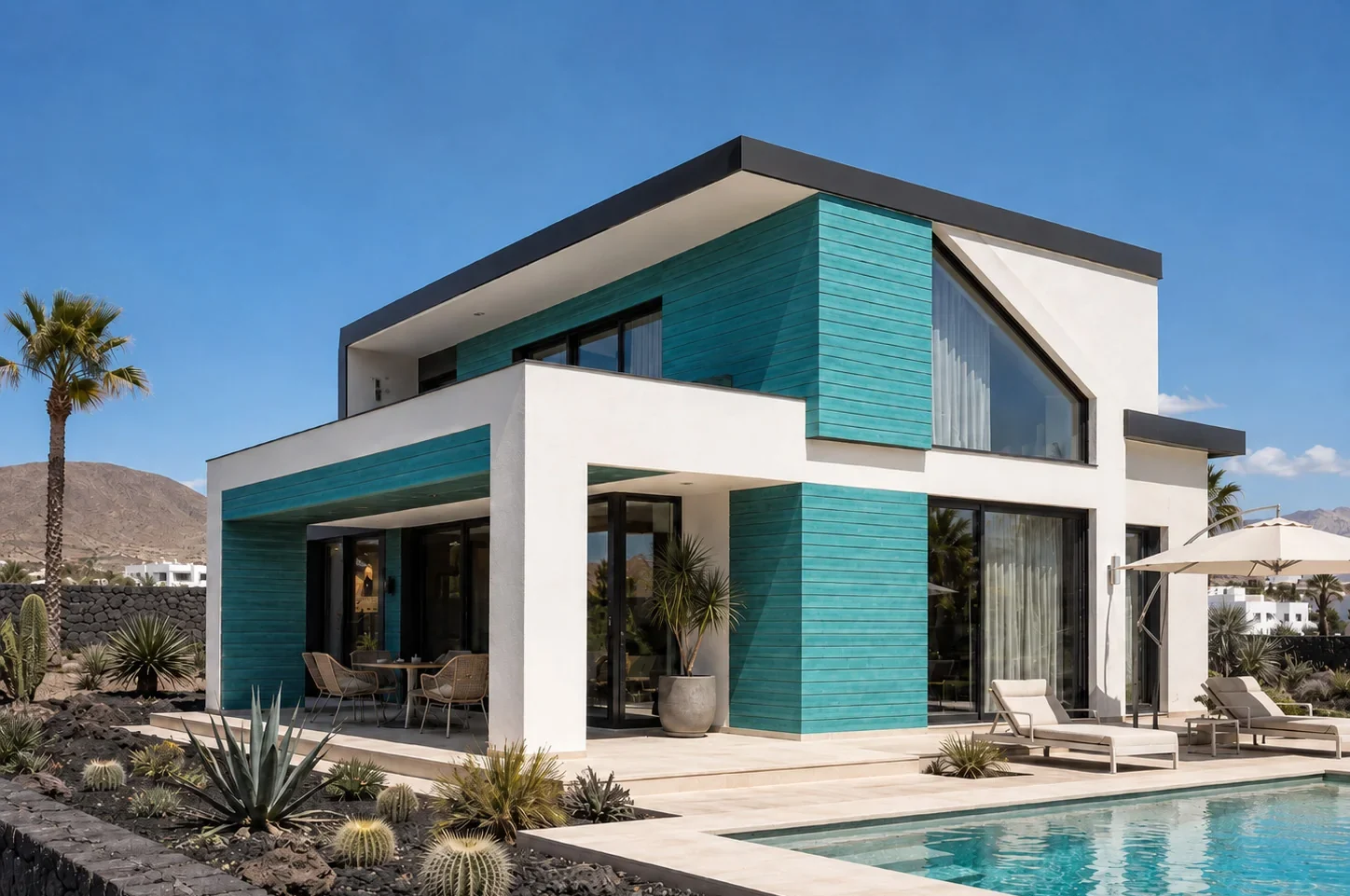
Buying an existing home or building in Fuerteventura? A structured comparison
The choice is not purely financial. Timing, location, quality, maintenance, customisation and risk should be compared on the same basis.
Where to begin
An existing home can be occupied sooner but requires checks on legality, condition and necessary work. Renovation can conceal costs that are difficult to assess until services and construction are opened up. The starting point is not selecting a catalogue solution. It is understanding how the subject relates to the plot, local rules and the way the home will actually be used.
Technical decisions
Building allows orientation, spaces, services and materials to be designed around the client’s needs. A new project takes longer and depends on finding a genuinely suitable plot. Across Fuerteventura, sunlight, wind, salt exposure, access and service availability vary considerably. A decision that looks sound in theory can become inefficient on the wrong plot.
Budget, timing and checks
The comparison should include purchase price, taxes, alterations, maintenance and financing costs over time. The preferred location may make one option much more realistic than the other. A useful quotation states what is included, what is excluded and which assumptions have been made. A stand-alone figure without a design or plot assessment is only an early reference.
How to reach a robust decision
A new home can reduce layout compromises and early repairs but still requires careful site control. The final decision should start with priorities: moving quickly, securing a specific area or creating a tailored home. The strongest choice is the one that remains coherent when planning feasibility, architectural quality, future maintenance and the total budget are considered together.
Practical checklist
- An existing home can be occupied sooner but requires checks on legality, condition and necessary work.
- Renovation can conceal costs that are difficult to assess until services and construction are opened up.
- Building allows orientation, spaces, services and materials to be designed around the client’s needs.
- A new project takes longer and depends on finding a genuinely suitable plot.
- The comparison should include purchase price, taxes, alterations, maintenance and financing costs over time.
- The preferred location may make one option much more realistic than the other.
- A new home can reduce layout compromises and early repairs but still requires careful site control.
- The final decision should start with priorities: moving quickly, securing a specific area or creating a tailored home.
Mistakes to avoid
- Comparing an existing-home price with construction cost alone, excluding land and other expenses.
- Assessing an existing property only by its appearance.
- Choosing new construction without accepting the timing, approvals and decisions the project requires.
Frequently asked questions
What is the first step?
An existing home can be occupied sooner but requires checks on legality, condition and necessary work. Renovation can conceal costs that are difficult to assess until services and construction are opened up.
What determines cost and timing?
The comparison should include purchase price, taxes, alterations, maintenance and financing costs over time. The preferred location may make one option much more realistic than the other.
Is a technical check needed before deciding?
A new home can reduce layout compromises and early repairs but still requires careful site control. The final decision should start with priorities: moving quickly, securing a specific area or creating a tailored home. The strongest choice is the one that remains coherent when planning feasibility, architectural quality, future maintenance and the total budget are considered together.
Do you have a plot or an idea to assess?
Tell us the area, approximate floor area and finish level you have in mind. We can help organise the initial checks and the design path.
Discuss your project →