
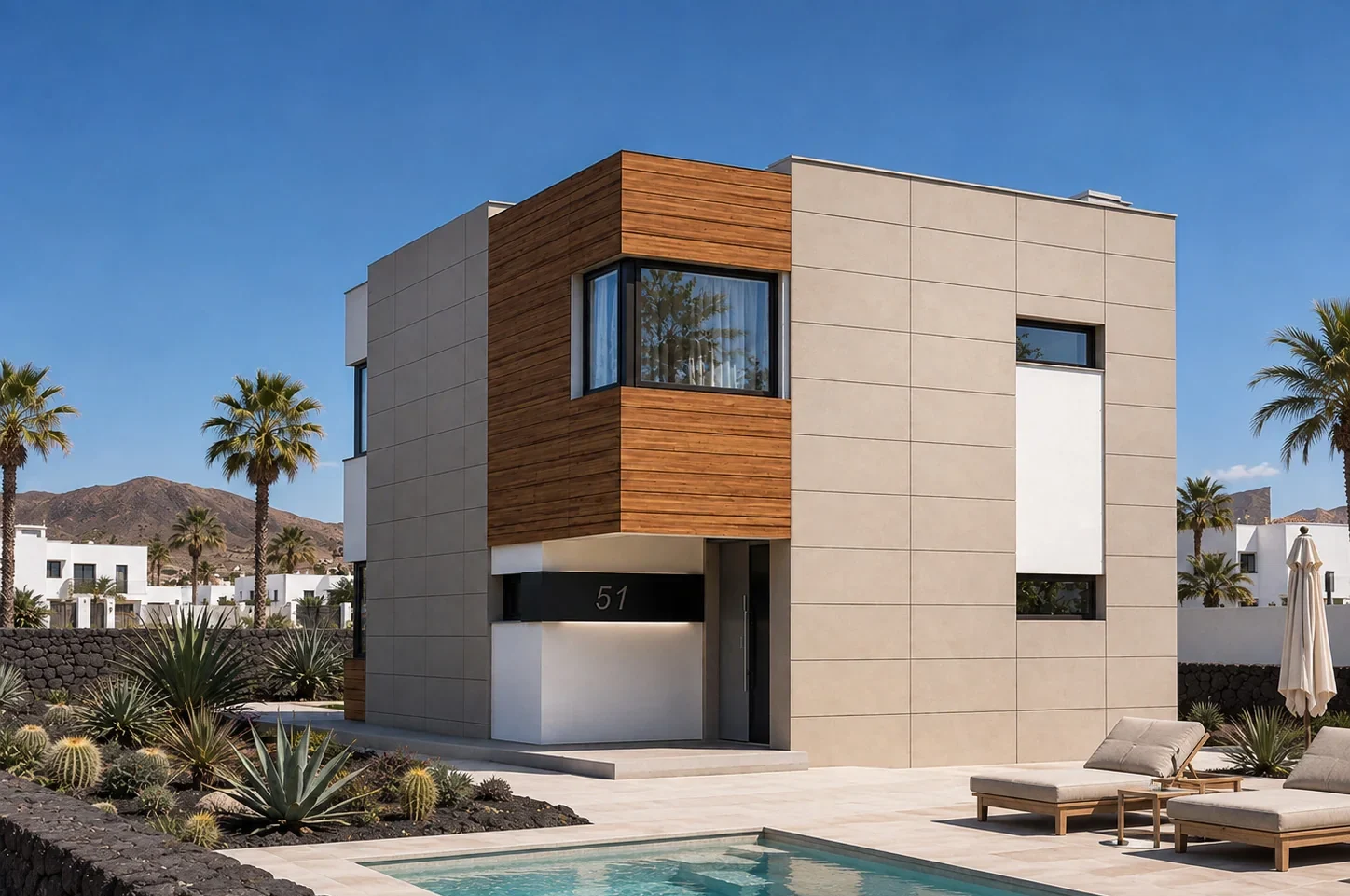
Building near the sea in Fuerteventura: what really changes
Ocean proximity can improve views and value, but makes exposure, corrosion, wind, privacy and maintenance more important.
Where to begin
Check planning, coastal and landscape restrictions before developing the proposal. Study salt aerosol and prevailing winds because straight-line distance from the sea does not define exposure alone. A useful quotation states what is included, what is excluded and which assumptions have been made. A stand-alone figure without a design or plot assessment is only an early reference.
Technical decisions
Select materials, fixings and external equipment for marine conditions and planned maintenance. Protect openings and terraces without losing views through overhangs, filters and carefully positioned volumes. The strongest choice is the one that remains coherent when planning feasibility, architectural quality, future maintenance and the total budget are considered together.
Budget, timing and checks
Manage privacy in relation to promenades, roads, beaches and neighbouring plots. Design drainage and levels for sand, spray and potentially severe weather. The starting point is not selecting a catalogue solution. It is understanding how the subject relates to the plot, local rules and the way the home will actually be used.
How to reach a robust decision
Allow more frequent cleaning of glazing, panels, windows and outdoor equipment. Compare the location value with higher material and maintenance costs over the life of the home. Across Fuerteventura, sunlight, wind, salt exposure, access and service availability vary considerably. A decision that looks sound in theory can become inefficient on the wrong plot.
Practical checklist
- Check planning, coastal and landscape restrictions before developing the proposal.
- Study salt aerosol and prevailing winds because straight-line distance from the sea does not define exposure alone.
- Select materials, fixings and external equipment for marine conditions and planned maintenance.
- Protect openings and terraces without losing views through overhangs, filters and carefully positioned volumes.
- Manage privacy in relation to promenades, roads, beaches and neighbouring plots.
- Design drainage and levels for sand, spray and potentially severe weather.
- Allow more frequent cleaning of glazing, panels, windows and outdoor equipment.
- Compare the location value with higher material and maintenance costs over the life of the home.
Mistakes to avoid
- Assessing only the view and not exposure.
- Using standard components not suited to marine conditions.
- Opening extensive glazing to public routes without a privacy strategy.
Frequently asked questions
What is the first step?
Check planning, coastal and landscape restrictions before developing the proposal. Study salt aerosol and prevailing winds because straight-line distance from the sea does not define exposure alone.
What determines cost and timing?
Manage privacy in relation to promenades, roads, beaches and neighbouring plots. Design drainage and levels for sand, spray and potentially severe weather.
Is a technical check needed before deciding?
Allow more frequent cleaning of glazing, panels, windows and outdoor equipment. Compare the location value with higher material and maintenance costs over the life of the home. The strongest choice is the one that remains coherent when planning feasibility, architectural quality, future maintenance and the total budget are considered together.
Related guides
Do you have a plot or an idea to assess?
Tell us the area, approximate floor area and finish level you have in mind. We can help organise the initial checks and the design path.
Discuss your project →