
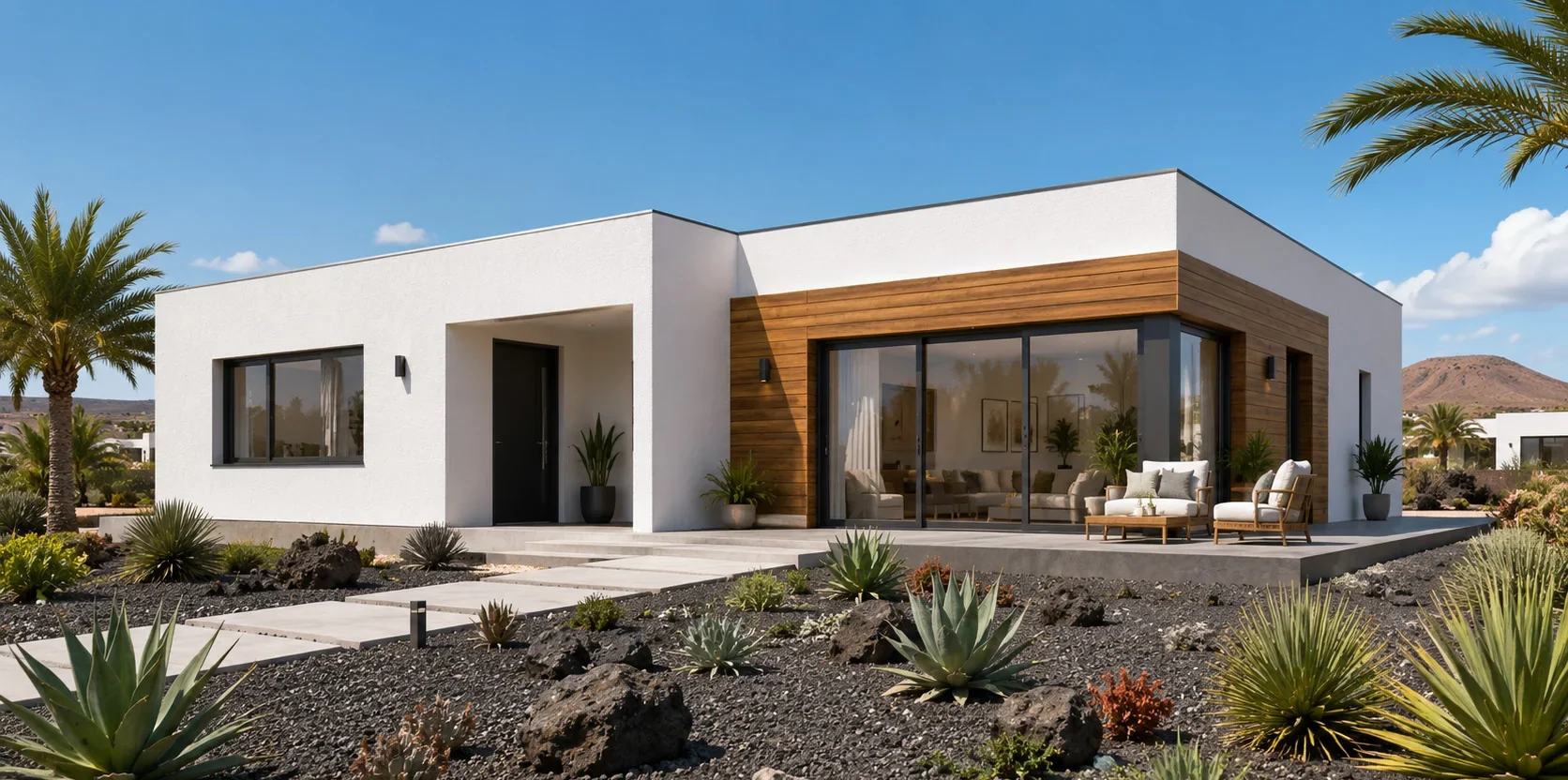
A low-maintenance garden in Fuerteventura: plants, stone and irrigation
A climate-responsive garden uses little water, withstands wind and enhances the home without becoming a constant job.
Where to begin
Start with soil, wind, sun and water availability rather than selecting plants only from images. Prefer species adapted to arid and saline conditions, checking their mature size and behaviour. The starting point is not selecting a catalogue solution. It is understanding how the subject relates to the plot, local rules and the way the home will actually be used.
Technical decisions
Group plants by water need so irrigation remains efficient and controllable. Use mineral mulch and local stone to reduce evaporation and connect with the landscape. Across Fuerteventura, sunlight, wind, salt exposure, access and service availability vary considerably. A decision that looks sound in theory can become inefficient on the wrong plot.
Budget, timing and checks
Prepare soil and drainage in planting areas because surface gravel is not a substitute for suitable ground. Protect young plants from wind until root systems are established. A useful quotation states what is included, what is excluded and which assumptions have been made. A stand-alone figure without a design or plot assessment is only an early reference.
How to reach a robust decision
Use planting for shade, privacy and wind control without harming foundations or services. Provide access for pruning, replacement and irrigation maintenance. The strongest choice is the one that remains coherent when planning feasibility, architectural quality, future maintenance and the total budget are considered together.
Practical checklist
- Start with soil, wind, sun and water availability rather than selecting plants only from images.
- Prefer species adapted to arid and saline conditions, checking their mature size and behaviour.
- Group plants by water need so irrigation remains efficient and controllable.
- Use mineral mulch and local stone to reduce evaporation and connect with the landscape.
- Prepare soil and drainage in planting areas because surface gravel is not a substitute for suitable ground.
- Protect young plants from wind until root systems are established.
- Use planting for shade, privacy and wind control without harming foundations or services.
- Provide access for pruning, replacement and irrigation maintenance.
Mistakes to avoid
- Creating extensive lawn without considering water and maintenance.
- Planting delicate species in full salt-wind exposure.
- Laying decorative stone without drainage and weed management.
Frequently asked questions
What is the first step?
Start with soil, wind, sun and water availability rather than selecting plants only from images. Prefer species adapted to arid and saline conditions, checking their mature size and behaviour.
What determines cost and timing?
Prepare soil and drainage in planting areas because surface gravel is not a substitute for suitable ground. Protect young plants from wind until root systems are established.
Is a technical check needed before deciding?
Use planting for shade, privacy and wind control without harming foundations or services. Provide access for pruning, replacement and irrigation maintenance. The strongest choice is the one that remains coherent when planning feasibility, architectural quality, future maintenance and the total budget are considered together.
Related guides
Do you have a plot or an idea to assess?
Tell us the area, approximate floor area and finish level you have in mind. We can help organise the initial checks and the design path.
Discuss your project →