
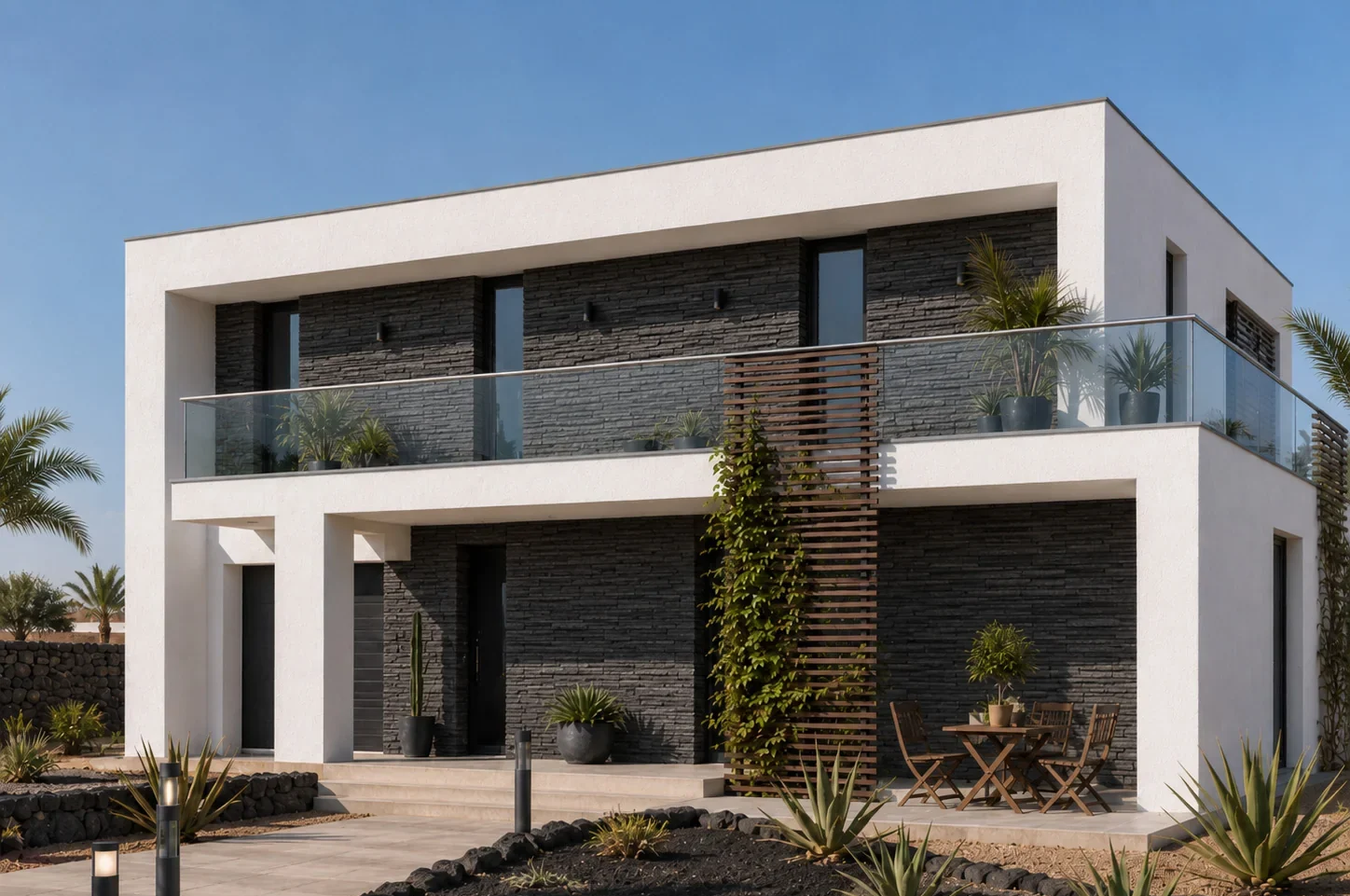
An efficient home in Fuerteventura: reducing energy without complicating life
Efficiency starts with passive measures: orientation, shade, envelope and ventilation. Systems come afterwards and should remain easy to operate.
Where to begin
Reduce demand through orientation, compact form, insulation and solar control. Design glazing and shading as one system instead of compensating with air conditioning. The starting point is not selecting a catalogue solution. It is understanding how the subject relates to the plot, local rules and the way the home will actually be used.
Technical decisions
Size equipment to actual loads rather than oversizing by habit. Coordinate hot water and solar generation with occupancy and consumption patterns. Across Fuerteventura, sunlight, wind, salt exposure, access and service availability vary considerably. A decision that looks sound in theory can become inefficient on the wrong plot.
Budget, timing and checks
Meter principal loads so anomalies and waste become visible. Prefer understandable equipment and controls with available spares and support. A useful quotation states what is included, what is excluded and which assumptions have been made. A stand-alone figure without a design or plot assessment is only an early reference.
How to reach a robust decision
Check airtightness, thermal bridges and workmanship because performance depends on execution. Compare expected savings, cost, lifespan and maintenance before adding complex technology. The strongest choice is the one that remains coherent when planning feasibility, architectural quality, future maintenance and the total budget are considered together.
Practical checklist
- Reduce demand through orientation, compact form, insulation and solar control.
- Design glazing and shading as one system instead of compensating with air conditioning.
- Size equipment to actual loads rather than oversizing by habit.
- Coordinate hot water and solar generation with occupancy and consumption patterns.
- Meter principal loads so anomalies and waste become visible.
- Prefer understandable equipment and controls with available spares and support.
- Check airtightness, thermal bridges and workmanship because performance depends on execution.
- Compare expected savings, cost, lifespan and maintenance before adding complex technology.
Mistakes to avoid
- Compensating for poor orientation with larger systems.
- Installing technology that nobody can operate or maintain.
- Judging efficiency by the label on one component alone.
Frequently asked questions
What is the first step?
Reduce demand through orientation, compact form, insulation and solar control. Design glazing and shading as one system instead of compensating with air conditioning.
What determines cost and timing?
Meter principal loads so anomalies and waste become visible. Prefer understandable equipment and controls with available spares and support.
Is a technical check needed before deciding?
Check airtightness, thermal bridges and workmanship because performance depends on execution. Compare expected savings, cost, lifespan and maintenance before adding complex technology. The strongest choice is the one that remains coherent when planning feasibility, architectural quality, future maintenance and the total budget are considered together.
Related guides
Do you have a plot or an idea to assess?
Tell us the area, approximate floor area and finish level you have in mind. We can help organise the initial checks and the design path.
Discuss your project →